
Demolishing a kitchen in New Orleans is easy to start and hard to do well. Pulling cabinets off a wall takes little skill, but the job depends on capping water, power, and gas first, lifting heavy stone counters without cracking them, and controlling dust. In a house built before about 1980, materials also get tested first, because flooring and joint compound may contain asbestos and older paint may contain lead.
At TurnKey Kitchen Renovations, demolition day is the one homeowners most want to help with and the one they should usually sit out. It looks like the simplest part of the job.
It is actually the part with the most ways to go wrong, from a live gas line to a stone countertop that takes several people to lift. Get the order wrong and you damage the house you are about to spend money improving.
Here is what a properly run demolition involves. Contact us today to talk through demolition on your own kitchen.
Why Kitchen Demolition Starts With the Services Off
Tearing out a kitchen is simple but easy to get wrong. The hard parts are shutting off and capping water, electricity, and gas, lifting stone countertops that crack when they flex, keeping dust out of the rest of the house, and testing older materials. In New Orleans homes, demolition can also uncover old leaks or unexpected framing.
Nothing starts until the services are off, because a live water line, circuit, or gas pipe turns a routine tear-out into a flood, a shock, or a leak. Water gets shut off at the supply valves, or at the main if the valves cannot be trusted, and the open lines are capped.
Kitchen circuits are switched off and confirmed dead, and anything hardwired is disconnected by an electrician. Gas, where present, is capped by someone qualified, and only then does anything come off a wall.
The Demolition Sequence
The order is not tradition. Each step clears the way for the next one and removes a hazard before anyone has to work around it.
Appliances Out First
Appliances come out first, because each needs its own disconnection and because they block everything that follows.
A refrigerator being reused gets relocated properly and stays plugged in if the household needs it. A dishwasher needs its supply line and drain disconnected at the fittings, and a gas range needs its connector capped by someone licensed.
Note the model numbers of anything being discarded before it leaves. Trim kits, filters, and replacement parts all key off that number, which is impossible to recover once the unit is gone.
Countertops Before Cabinets
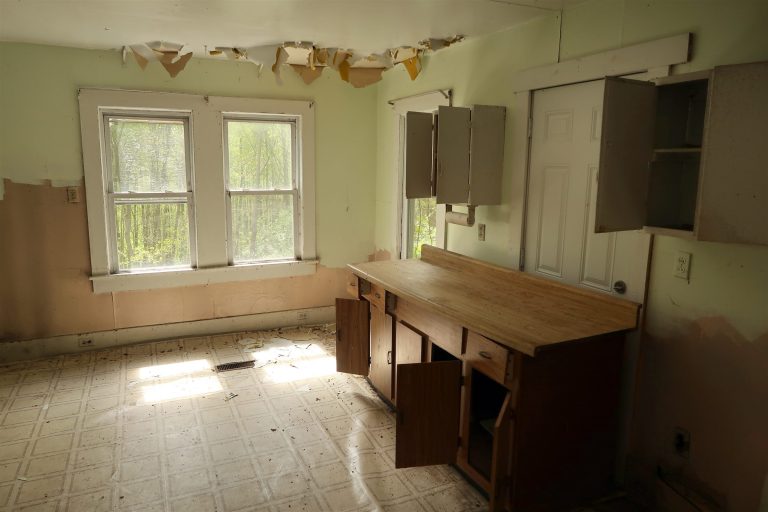 Countertops come off before the cabinets carrying them, and stone is heavier and more brittle than it looks. A run of granite or quartz is a multi-person lift that cracks the moment it flexes.
Sinks and cooktops come out first, and the counter is usually cut into sections where it is not salvaged. Where it is salvaged, it has to come off whole, which needs more hands and somewhere safe to set it down. Planning a countertop remodel around a reused slab is a different job from one ending in the dumpster.
Adhesive at the cabinet tops means the counter rarely lifts cleanly. Cutting that bead first saves both the counter and the cabinet.
Upper Cabinets Before Base Cabinets
Uppers come down before bases, so nobody works overhead while stretched across a base run. The base cabinets also give somewhere to rest an upper as it comes free, which turns an awkward lift into a manageable one.
Doors and drawers come off first, which lightens each box and removes anything that can swing open mid-lift. Then the mounting screws come out, with the box supported before the last one goes, because a wall cabinet weighs more than it looks.
Cabinets heading for donation have to come down intact, which is slower and needs the fasteners backed out in order. If new kitchen cabinets are on order, make that call before demolition day.
Surfaces and Substrate Last
Backsplash, flooring, and any drywall in the scope come last, once the room is clear. That is the first look at the subfloor, the framing, and the wall cavities.
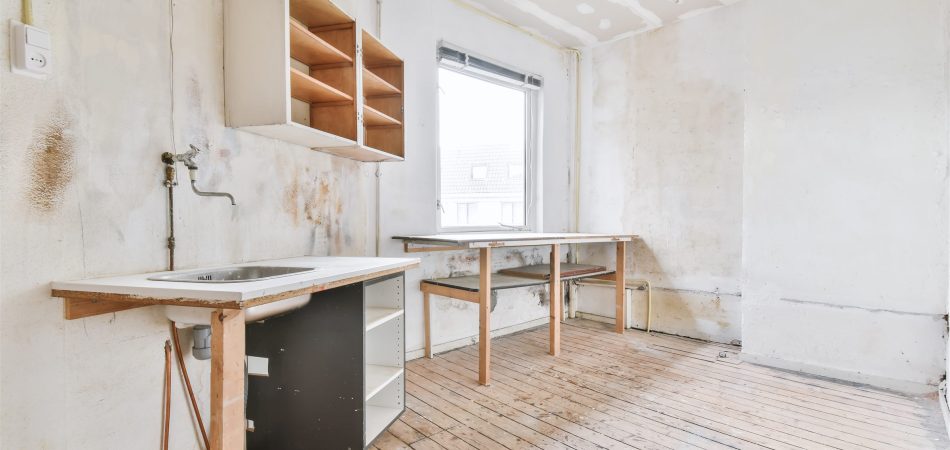
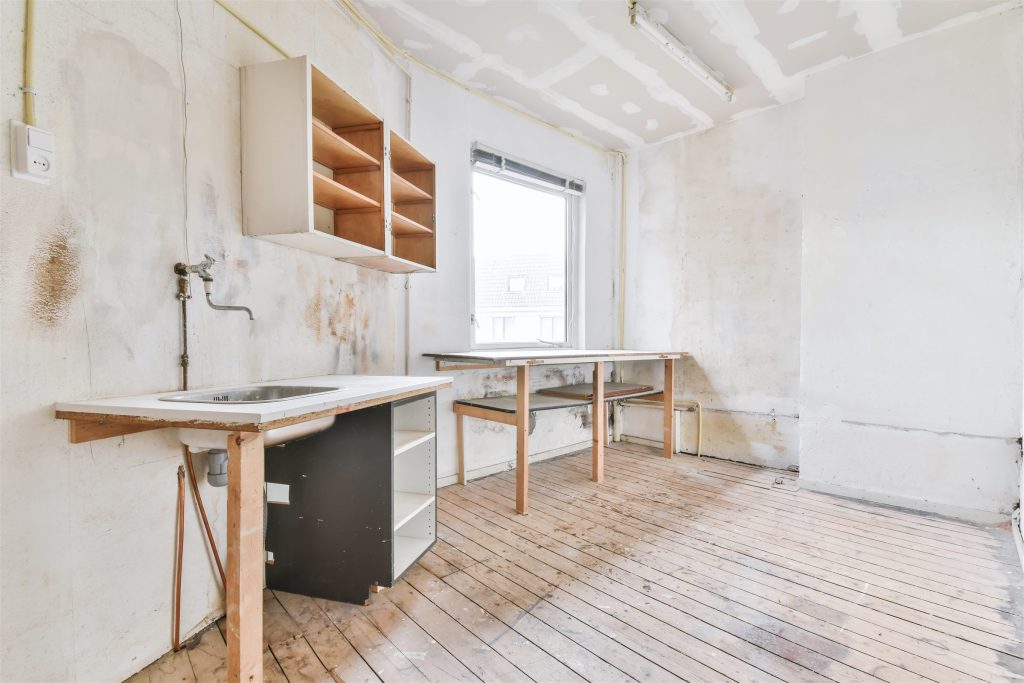
This is where a demolition usually finds something: an old leak, unexpected framing, or services running where nobody expected them. Stopping to assess beats pushing through, because what sits behind the wall decides what the new layout can do.
A tight footprint has the least room to absorb a surprise, which is why small kitchen remodeling is worth planning around what the open room reveals. We coordinate the trades across the project, so a finding here feeds back into the plan instead of stalling it.
Containment and What Comes Out of the Room
Containment gets decided before the first cabinet moves, because dust travels the moment demolition starts and no barrier can be retrofitted around a room full of debris. The table below covers what belongs in place before anyone picks up a tool.
| In Place Before Demolition | What It Prevents |
|---|---|
| Sealed barrier at every opening, including the floor gap | Dust reaching the rest of the house |
| Air conditioning returns near the work zone covered | Dust being distributed through the duct system |
| Hard floor protection along the carry route | Scratched or dented floors in untouched rooms |
| Corner and doorframe protection | Damage from carrying cabinets and counters out |
| Dumpster sited and the ground protected | Debris accumulating in the yard or the street |
Pre-1980 Materials Get Tested, Not Assumed
Resilient flooring, the backing on sheet flooring, and joint compound from before roughly 1980 may contain asbestos, and paint from before 1978 may contain lead. Neither is a reason for alarm, and both are a reason to test.
Undisturbed material is generally not the problem. Demolition is precisely the activity that disturbs it, which is why sampling belongs ahead of the work, not after a floor is already up.
Where a test comes back positive, the material is handled by people licensed for that work, under separate scope and cost. Finding it at survey stage is far cheaper than finding it with the room half open and a crew idle.
Dust Containment Is a Barrier, Not a Sheet
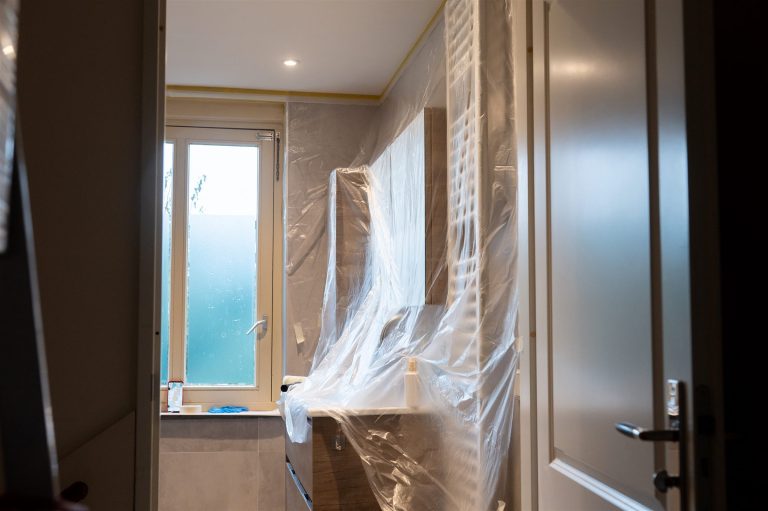 A taped plastic sheet across a doorway lifts every time somebody walks through, and by day two it is hanging off the frame. A zippered barrier or a temporary door holds its seal while still allowing access.
The gap at the floor matters as much as the sides, because that is the route most escaping dust actually takes. Sealing it costs almost nothing in time or material.
Air moving out of the work zone, through a fan or a negative air machine, does more than any barrier alone. The aim is for the kitchen to sit at lower pressure than the rooms around it, so air flows in through the gaps, not out.
Protecting the Route Out
Everything that leaves the kitchen travels through the rest of the house, and cabinets and countertops are heavy and awkward to steer around a corner. Hard board protection beats a drop cloth that slides underfoot.
Doorframes and wall corners take more damage than floors, because that is where a carried load pivots. Corner guards cost very little and are the difference between a clean handover and a punch list.
Clear the route the evening before, including anything hanging on the walls along it.
Dumpsters, Disposal, and Salvage
A kitchen produces more debris by weight than most people expect, mostly countertops, tile, and plaster. Weight, not volume, usually fills a container.
New Orleans driveways are short and street parking is tight. A driveway placement needs plywood underneath, and the city requires a permit for a dumpster in public view in front of the property, so confirm that before booking the delivery.
Salvage is worth a conversation before demolition day. Cabinets, appliances, and light fixtures in serviceable condition can go to building-material reuse centers, but they have to come out intact, which takes longer.
Metal separates for recycling, and appliances usually have scrap value even when broken. Neither is worth much alone, but both keep weight out of the container.
Get the Sequence and the Containment Right
A well-run demolition is quiet, contained, and ends with a clean empty room and a scope everyone agrees on. A badly run one spreads dust through the house and finds its problems after the cabinets have already been ordered.
At TurnKey Kitchen Renovations, we handle kitchen projects from initial design through final installation and coordinate the trades along the way. Call us today to plan the demolition stage of your project.
Frequently Asked Questions
What is the correct order for kitchen demolition?
Services off and capped first, then appliances out, then countertops, then upper cabinets, then base cabinets, then backsplash, flooring, and any drywall in the scope. Uppers come down before bases so nobody is working overhead while reaching across a base run.
What happens to debris from demolished buildings?
Debris from a demolition can be sorted instead of dumped in one load. Items in serviceable condition, such as cabinets, appliances, and light fixtures, can go to building-material reuse centers, metal is separated for recycling, and the rest is hauled away in a container for disposal. On a kitchen job, weight rather than volume usually fills that container.
Can I remove kitchen cabinets myself?
Base cabinets are within reach of a competent homeowner once the services are off. Countertops, particularly stone, are heavy multi-person lifts that crack if they flex, and anything hardwired or connected to gas needs a qualified trade rather than enthusiasm.
Does old flooring need testing before removal?
Resilient flooring, the backing on sheet flooring, and joint compound from before roughly 1980 may contain asbestos, and paint from before 1978 may contain lead. Testing before demolition is straightforward. Finding out mid-demolition is considerably more disruptive and more expensive.
How do I keep demolition dust out of the rest of the house?
Use a zippered barrier instead of taped plastic, seal the gap at the floor, cover air conditioning returns near the work zone, and get air moving out of the kitchen with a fan or negative air machine. The aim is for that room to be the lowest-pressure one.
Do I need a permit for a dumpster in New Orleans?
The City of New Orleans requires a permit for a dumpster in public view in front of your property, so confirm it before booking the delivery rather than after. On a driveway, put plywood underneath to protect the surface.
Can old cabinets and appliances be donated?
Often, provided they come out intact and are still serviceable, and building-material reuse centers are the usual destination. Removing cabinets whole takes longer than breaking them up, so the decision is worth making before demolition day rather than during it.
What usually gets discovered during demolition?
Evidence of a past leak, unexpected framing, and services running where nobody expected them are the three common findings, particularly in older New Orleans homes. The right response is to stop and reassess the scope rather than to push on and adjust afterward.